
International Festival of Traditional Sports and Games: Guercif Celebrates Intangible Cultural Heritage

The city of Guercif (northeastern Morocco) moved to the rhythm of the 2nd edition of the International Festival of Traditional Sports and Games on November 6 and 7, with the participation of delegations representing 37 countries from various continents, in an event aimed at celebrating human sporting and cultural heritage and strengthening bridges of rapprochement between peoples and civilizations.

Held over two days under the slogan "Intangible Cultural Heritage: A Symbol of Identity and a Fundamental Element of Memory," the festival was organized by the Royal Moroccan Federation of Sport for All (FRMSPT), in partnership with the Prefecture of the Province of Guercif and under the aegis of the International Federation of Sport for All (FISPT), in commemoration of the first anniversary of Unity Day and the 51st anniversary of the glorious Green March.
The opening ceremony of the festival took place in the presence of the Governor of the Province of Guercif, Mr. Abdesslam El Hattach, the President of the FISPT, Mr. Issa Mohammed Abdulrahim Al-Rifai, the presidents of numerous African federations of sport for all and traditional sports and games, as well as legends of Moroccan sport, Olympic champions in athletics and boxing, and former stars of national football.
On this occasion, Ms. Nezha Bidouane, President of the Royal Moroccan Federation of Sport for All (FRMSPT), delivered a speech in which she welcomed the delegations from brotherly and friendly countries participating in the festival in the city of Guercif—gateway to eastern Morocco, a city that, for the occasion, reconnected with its memory.

She emphasized that the Royal Moroccan Federation of Sport for All attaches paramount importance to the preservation and promotion of this intangible heritage at the national level, drawing inspiration from the High Orientations of His Majesty King Mohammed VI, may God assist Him.
She also proudly recalled the Message addressed by His Majesty King Mohammed VI to the participants at the 17th session of the UNESCO Intergovernmental Committee for the Safeguarding of the Intangible Cultural Heritage, held in Rabat from November 28 to December 3, 2022.

In this message, His Majesty the King stated: "Our determined will to promote our heritage—a powerful marker of our identity, an essential component of our collective memory, a vehicle for the ideals and values that unite us, and a potential legacy for future generations."
Ms. Bidouane underscored that, in this regard, the Sovereign called for "strengthening international multilateral cooperation in the protection of intangible cultural heritage. To this end, the exchange of ideas and experiences must be encouraged regarding the means of safeguarding it, and judicious approaches must be developed to raise awareness among younger generations of the importance of our cultural legacies. They will thus grasp the true scope of this heritage that we bequeath to all humanity: it is rich in its multiple cultural tributaries and plunges its roots into the depths of history."

For his part, the President of the FISPT praised the special attention paid by the Kingdom of Morocco to the preservation of intangible cultural heritage, "which is a human heritage requiring protection and promotion in order to ensure its transmission to future generations."
He stressed that the International Federation "strives to anchor the practice of sport as a right accessible to all and a means of promoting health and social integration," noting that since its launch in the city of Assa in 2024, the Festival has become "a platform for encounters and cultural exchange, as well as a space to showcase traditional games and encourage their practice."

Mr. Issa Mohammed Abdulrahim Al-Rifai noted that "the resounding success of the International Festival of Traditional Sports and Games in the city of Guercif confirms the leading role now played by the Kingdom of Morocco in supporting and spreading the culture of sport for all, as well as in anchoring its noble human and social values."
Traditional games were a highlight of this international gathering, where participating delegations competed in several events, including "tug of war," which saw a thrilling competition crowned by the victory of the Moroccan team, much to the delight of the spectators. Second and third places went respectively to the teams from the Sultanate of Oman and Mali.

The delegations from the various participating countries offered the local population an opportunity to discover the richness and diversity of traditional games and sports from around the world, while highlighting ancestral Moroccan traditions as well as the unique characteristics of our authentic culture and heritage.
This event, which coincided with the activities of the 33rd edition of the Guercif Olive Festival, was marked by tributes paid to several personalities and stakeholders in recognition of their contributions to the promotion of sport for all and the preservation of traditional games.

The Role of Traditional Sports and Games in Preserving Cultural Memory
The first day of the International Festival of Traditional Sports and Games was marked by the organization, on the morning of Friday, November 6, in Guercif, of a conference highlighting the cultural, educational, and social dimensions of traditional sports and games, as well as their pioneering roles in preserving cultural memory and promoting exchanges and rapprochement between peoples.
This conference was organized as part of the 2nd International Festival of Traditional Sports and Games and the 33rd edition of the Olive Festival in Guercif under the slogan "Intangible Cultural Heritage: A Symbol of Identity and a Fundamental Element of Memory."
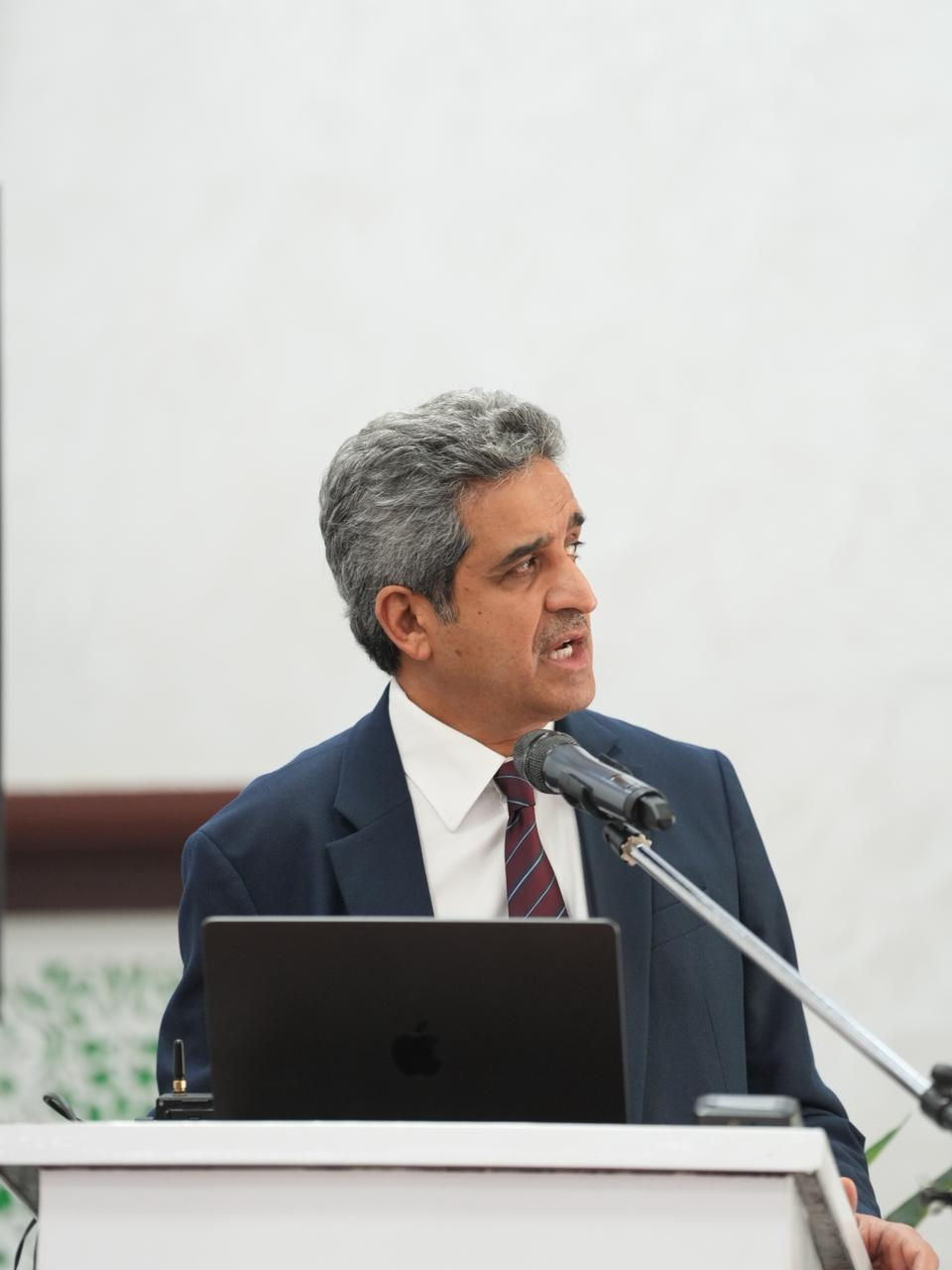
Thus, Dr. Ahmed Saad Al-Sharif, Vice-President of the International Federation of Sport for All in charge of education, described traditional sports and games in Morocco as "a local heritage with a universal vocation, drawing its roots from Arab-Islamic, Amazigh, Sahrawi-Hassani, African, and Andalusian cultures."

Among these practices is "Tbourida," inscribed in 2021 by UNESCO as part of the Intangible Cultural Heritage of Humanity.
In his address during this conference, Dr. Ahmed Saad Al-Sharif, Vice-President of the FISPT, emphasized that the Royal Moroccan Federation of Sport for All "integrates traditional games into a sporting and societal project open to all."

Under the title "The Guercif International Festival of Traditional Games: From Heritage to the Future – Traditional Sports and Games as an Educational Tool and a Bridge for Communication," the speaker highlighted the roots of traditional games and sports, from their anchoring in daily life to their status as human heritage passed down from ancestors to future generations.
Dr. Al-Sharif called for the creation of a joint documentary registry dedicated to traditional games and the integration of these heritage games into physical education curricula in schools, as well as in youth and summer centers, to ensure the transmission of skills and values across generations, in addition to launching an international exchange program around these practices and establishing a cooperation network among the relevant federations and institutions.

As for the Secretary General of the International Federation of Sport for All, Mr. Marco Tomasini, he presented the Federation's strategic guidelines for the 2026–2028 period, which are based on governance, membership development, the organization of programs and events, and knowledge production, noting the importance of establishing cooperation mechanisms to develop initiatives that contribute to social inclusion and the improvement of quality of life.

It should be recalled that FIGeST is the Italian Federation that has been dedicated for decades to Traditional Games and Sports (TGS), the living memory of the country and a heritage to be supported and promoted as a treasure trove of human and social values.
It represents a place of encounter, sharing, and exchange between generations, as well as a source of individual and collective enrichment. FIGeST promotes TGS on both recreational and competitive levels, combining culture and sport as a valuable ally for physical health.
In turn, the Deputy Secretary General of the Royal Moroccan Federation of Sport for All, Mr. Baba Souih, highlighted the cultural and social specificity of popular games within Sahrawi heritage, considering them a space for the transmission of values and the development of physical and mental capacities.
Thus, participants affirmed that promoting this heritage as an authentic component of intangible cultural heritage requires its documentation and transmission to rising generations, as well as its integration into educational and cultural initiatives to ensure its sustainability within the sporting and societal landscape.
They emphasized that these popular practices, with the human values and symbols they embody—reflecting the particularities and history of societies—constitute a space for cultural exchange and sports diplomacy, as well as a means of promoting the values of cooperation, tolerance, and fair competition, in addition to their role in promoting the Kingdom's civilizational diversity and strengthening bridges of openness to other cultures.
The "Women's Victory Strides" Consecrate the Culture of Women's Sport
The sporting event "Women's Victory Strides" (Les Foulées féminines de la victoire), held on Saturday, November 7 in Guercif as part of the 2nd edition of the International Festival of Traditional Sports and Games, is a landmark event aimed at highlighting the benefits of physical activity, encouraging women to practice sports, and passing on principles of ethics and solidarity.
Organized under the slogan "I Run According to My Abilities," on the occasion of the 51st anniversary of the glorious Green March and in celebration of Unity Day, as well as alongside the activities of the 33rd edition of the Guercif Olive Festival, this women's race saw the participation of some 3,000 girls and women from diverse social backgrounds in an inclusive, festive, and thoroughly good-natured atmosphere.

This race, held in the city of Guercif for the second consecutive year, is part of the first stage of the fourth edition of the "Women's Victory Strides," which aims to broaden the base of women's sports participation and provide an open space for different age groups to engage in a collective physical activity that builds self-confidence and encourages the adoption of healthy lifestyles.
In a statement to the press, the President of the International Federation of Sport for All (FISPT), Mr. Issa Mohammed Abdulrahim Al-Rifai, expressed his joy at participating in this festival, "which sparked great interaction from the local population," stating that "the success of this event is due to the diversity of its activities and the efforts deployed by the Royal Moroccan Federation of Sport for All, led by Ms. Nezha Bidouane, and the provincial authorities."

He noted that this edition follows the successful experience in 2024 in the city of Assa (southern Morocco), stressing the importance of continuing to organize upcoming stages in other regions of the Kingdom, which will strengthen the international renown of traditional games.
On the social front, the participation of women from different generations reflected the human dimension of the race. In this regard, the participants praised this commendable initiative, urging women to practice sport for its major and multidimensional role in physical, mental, and social health.
It is worth noting that more than 200,000 female cadets, juniors, and women from diverse social backgrounds took part in the "Women's Victory Strides" in 2024 and 2025.


Comments